
Artiste
Otist
Ville
Seyssinet-Pariset
Adresse
18 rue Georges Maeder, Seyssinet-Pariset 38170
À propos de l'œuvre
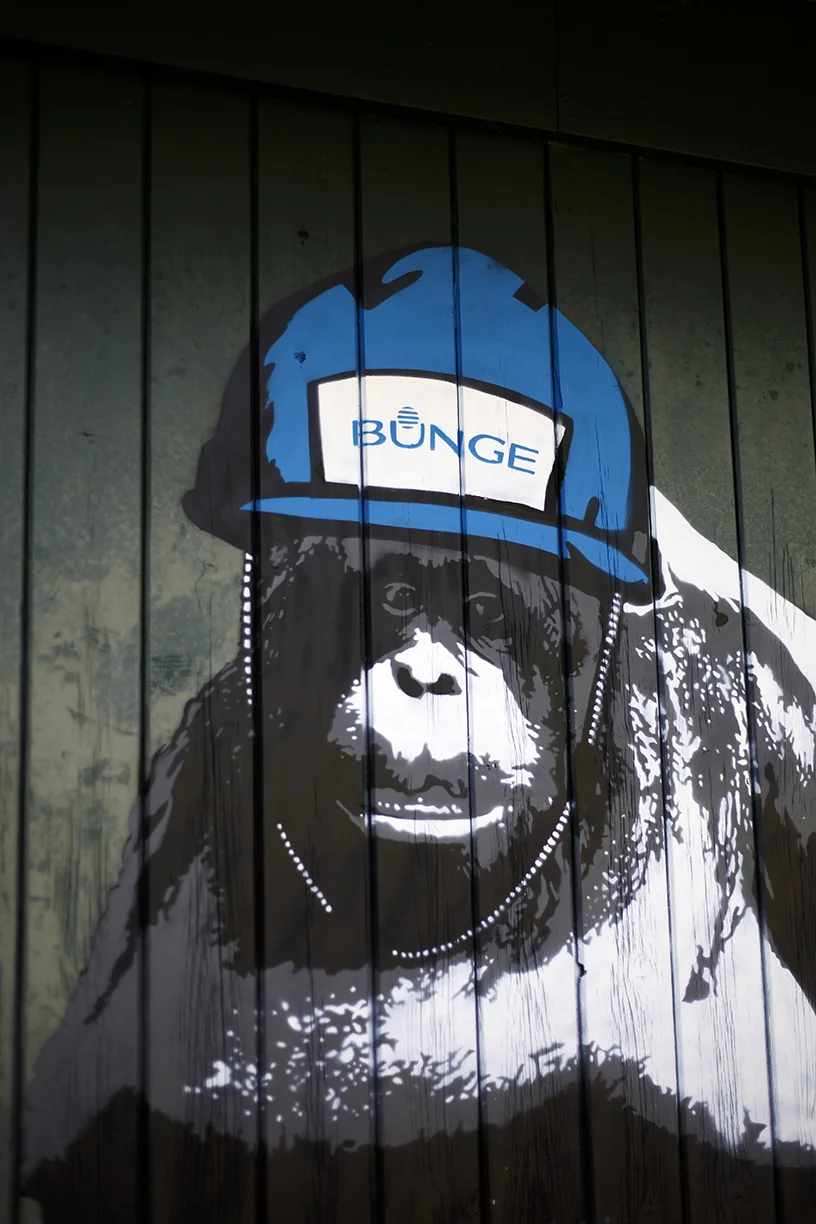
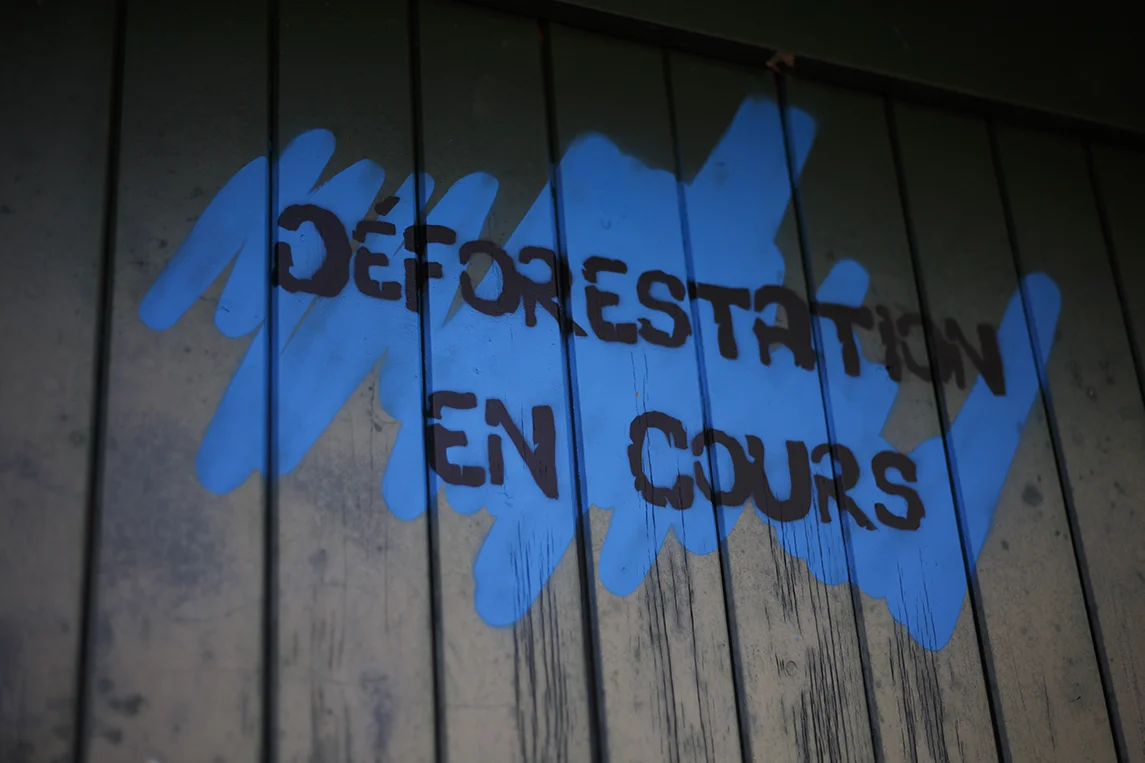
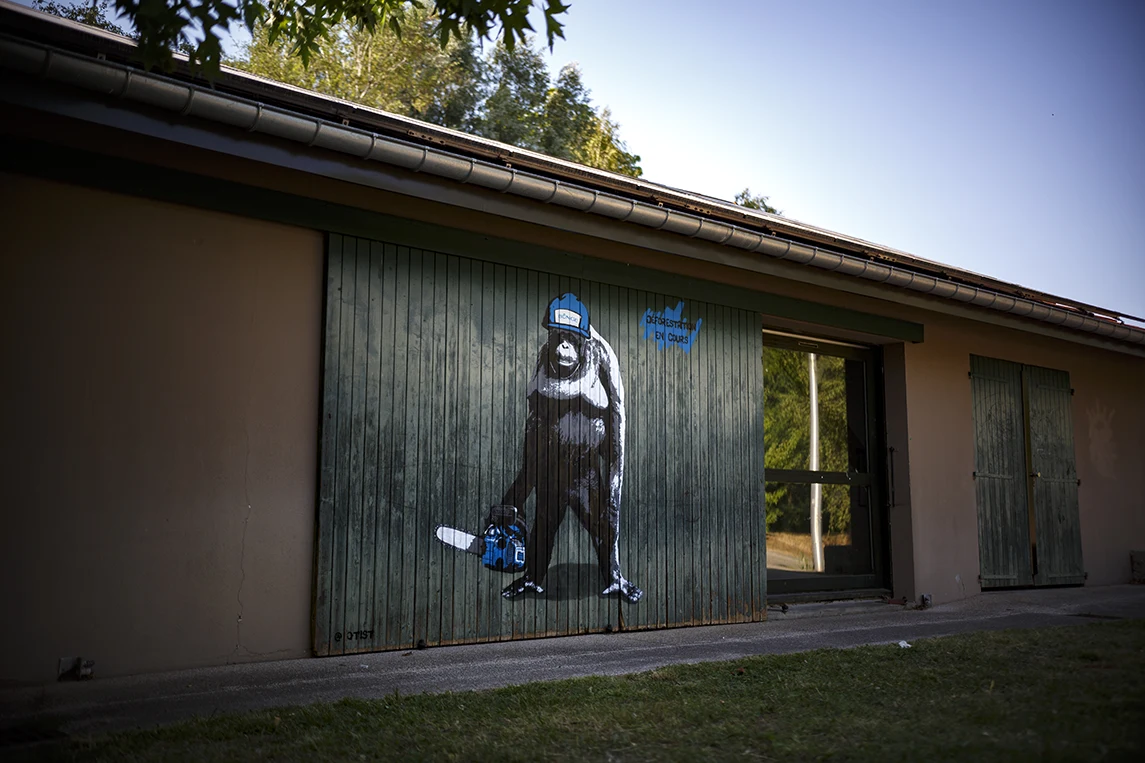
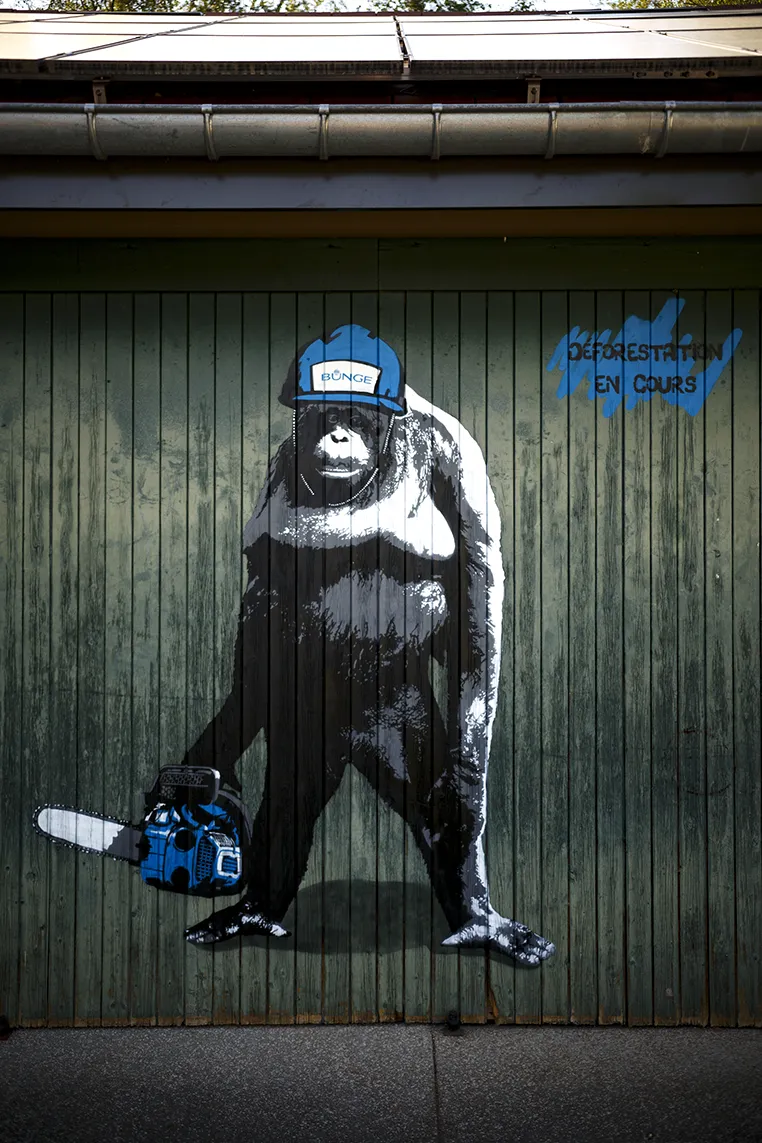
Bunge Monkey dénonce la déforestation galopante et la disparition de l’habitat de nombreuses espèces, dont celle de l’orang-outan (littéralement « l’homme de la forêt » en indonésien), l’un des singes les plus proches de l’homme.
Bunge Global est une entreprise spécialisée dans l’agriculture et la production de denrées alimentaires.
D’après l’artiste :
« Dans un rapport publié le 30 mars 2021 par l’ONG Chain Reaction Research, Bunge serait le trader le plus exposé à la déforestation dans le Cerrado brésilien, pour une surface estimée à plus de 90 000 hectares.
Le risque serait avéré sur 27 000 hectares avec une confiance haute ou moyenne, basée sur des données gouvernementales, à l’échelle de la propriété ou des groupes de producteurs.
Comme le rappelle l’ONG, Bunge s’était engagé à éviter toute déforestation à l’horizon 2025.
D’après cette dernière, citant les chiffres de la recherche spatiale brésilienne (INPE), près de 734 010 hectares de forêt auraient disparu du Cerrado en 2020, soit une hausse de 13,2 % par rapport à 2019. » (www.caracterres.fr)
Bunge Monkey denounces the rampant deforestation and the disappearance of the habitat of many species, including that of the orangutan (literally “the man of the forest” in Indonesian), one of the apes closest to humans.
Bunge Global is a company specializing in agriculture and the production of food commodities.
According to the artist:
“In a report published on March 30, 2021 by the NGO Chain Reaction Research, Bunge would be the trader most exposed to deforestation in the Brazilian Cerrado, for an estimated area of more than 90,000 hectares.
The risk would be confirmed on 27,000 hectares with high or medium confidence, based on government data, at the scale of the property or groups of producers.
As the NGO recalls, Bunge had committed to avoiding all deforestation by 2025.
According to the latter, citing figures from Brazilian spatial research (INPE), nearly 734,010 hectares of forest disappeared from the Cerrado in 2020, representing a 13.2% increase compared to 2019.” (www.caracterres.fr)